
What to expect from Panchakarma — a realistic guide
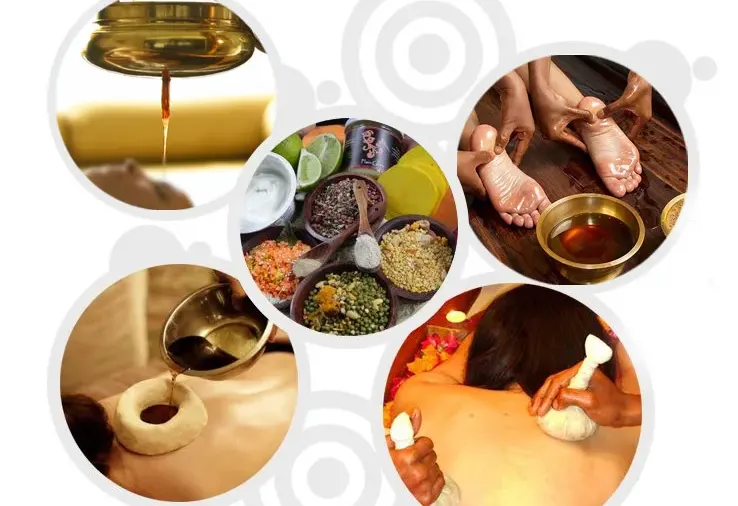
People arrive for Panchakarma with two very different expectations. Some expect a week of oil massages and herbal tea. Others expect something gruelling. Neither is quite right, and the gap between expectation and reality is the most common reason a course goes badly.
So here is what it actually involves.
It is a medical treatment, not a spa package
Abhyanga — the warm oil massage — is the part the wellness industry borrowed, and it is genuinely pleasant. But it is a preparatory step. Panchakarma proper is controlled therapeutic purification: it is prescribed after examination, monitored by a doctor, and it has real contraindications.
That last point is the honest test of who you are dealing with. If a centre offers you Panchakarma from a price list without examining you first, they are selling you a spa treatment under a medical name.
The three stages, and why the middle one gets all the attention
Purva Karma — preparation, usually 3 to 7 days
Snehana (oleation) means taking medicated ghee internally in a graded dose, and oil externally. The internal ghee is the part people find hardest. The dose increases daily, it is taken on an empty stomach, and by day three or four most people find it genuinely unappealing.
It has a purpose. Ayurveda understands metabolic waste as lodged in the deeper tissues; oleation is what mobilises it toward the digestive tract so it can be removed.
Swedana (therapeutic sweating) follows, loosening what oleation has mobilised.
Pradhana Karma — the main procedure, 1 day
This is the day people picture: Vamana, Virechana, Basti, Nasya or Rakta Mokshana, depending on your condition. It is a single, defined intervention. Plan to rest, and often to rest the following day too.
Paschat Karma — after care, 5 to 7 days
This is the stage people skip, and skipping it is why results do not hold.
Samsarjana Krama is a staged return to normal food. You begin with thin rice gruel and build back gradually over several days — thicker gruel, then soft rice, then normal diet. Your digestive capacity has been deliberately reset, and loading it immediately undoes the work.
Going out for a heavy meal on the evening after Virechana is, unfortunately, common. It is also the single most reliable way to waste three weeks.
How long it really takes
| Type | Typical duration |
|---|---|
| Wellness or rejuvenation package | 3–7 days |
| Focused single-procedure course | 7–14 days |
| Full classical Panchakarma | 21–28 days |
The full course is longer than most people expect, because two thirds of it are the stages either side of the procedure everyone focuses on.
What the diet is actually like
Light, warm, simple and cooked. Through preparation you move progressively toward lighter food. After the main procedure you follow the graded regimen above.
Things to plan around: no cold food or drinks, no curd at night, minimal raw salad, no alcohol, and no skipping the gruel stage because you feel fine.
You will probably feel hungry. That is expected and part of it.
Who should not have it
The purification procedures are not for everyone:
- Pregnancy
- Very young children and frail elderly patients
- Uncontrolled diabetes or hypertension
- Active infection or fever
- Recent surgery
- Certain cardiac conditions
- Severe debility or malnutrition
Some of these rule out particular procedures rather than all of them, which is a judgement made at assessment.
If you take prescribed medication for a diagnosed condition, bring the details. We do not ask patients to stop conventional treatment in order to start Panchakarma. Anyone who does is taking a risk with your health that is not theirs to take.
What it helps, and what it does not
Used appropriately, Panchakarma is most effective for chronic conditions with a clear Ayurvedic basis — chronic back pain, sciatica, arthritis, psoriasis and eczema, bronchial asthma, chronic sinusitis, migraine, IBS, and stress-related states.
It is not an emergency treatment, it is not a substitute for surgery where surgery is needed, and it is not a general cure. For several conditions it works best alongside conventional treatment.
Practical preparation
- Clear your calendar for the main procedure day and ideally the day after
- Arrange light duties if your work is physically demanding
- Stock the kitchen for the post-procedure diet before you start, not during
- Expect to feel tired midway — that is normal
- Ask for the written schedule and estimate before day one, so you know exactly what you are committing to
Read more about Panchakarma at Pranav Ayur, or book an assessment to find out which procedures would suit you.