

Service
Kshara Sutra
The classical Ayurvedic thread technique for fistula — low recurrence, continence preserved, treated as an outpatient
Overview
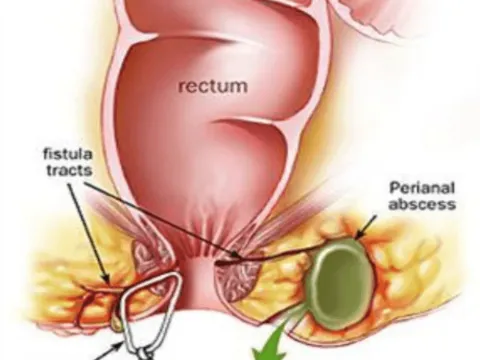
Kshara Sutra is a medicated thread used to treat fistula tracts. It is a classical Ayurvedic para-surgical technique described by Sushruta, Charaka and Vagbhata, and it is one of the few traditional procedures to have been formally re-established in modern practice — by the Department of Shalya Tantra at Banaras Hindu University, and subsequently validated through CCRAS and ICMR. It is now practised widely in India and beyond.
The thread is coated in successive layers of herbal alkaline preparation, passed through the tract, and tied. Over the following week it does two things at once:
- Cuts slowly through the tissue of the tract
- Heals the tissue behind it as it advances
The thread is replaced weekly until the tract is completely divided and healed.
Why gradual division is the whole point
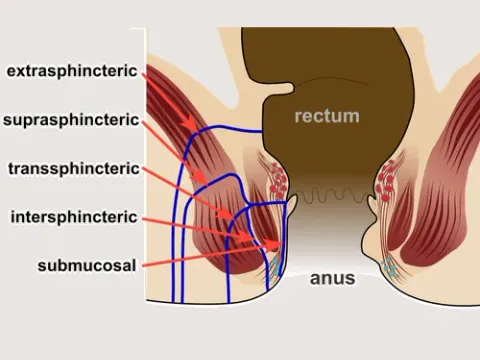
An anal fistula tract crosses the sphincter muscles — the muscles that control continence. Conventional fistulotomy divides the tract, and the sphincter with it, in a single action. For low tracts that is usually fine. For high or complex tracts, the more muscle divided at once, the greater the risk to continence.
Kshara Sutra divides at roughly 0.5–1 cm per week, and because tissue heals behind the thread as it advances, the sphincter is never left widely divided at any single moment. That is what preserves function, and it is why the technique suits high, complex and recurrent fistulas particularly well.
The trade-off is time. This takes weeks rather than one operation. We would rather say that plainly than oversell it.
Conditions treated
- Anal fistula (fistula-in-ano, bhagandara) — the primary indication
- Pilonidal sinus — where conventional wide excision leaves a wound in an area that heals poorly
- Complex and recurrent fistulas, including after failed previous surgery
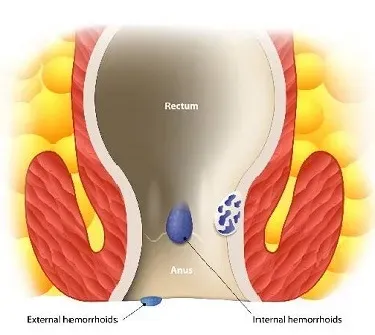
- Haemorrhoids, sentinel piles — via the related technique, Kshara Karma
- Rectal and anal polyps, warts and other sinus tracts
Advantages
- A day-care para-surgical procedure — no long admission
- Minimal recurrence compared with conventional fistulotomy
- Avoids the incontinence, stenosis and stricture risks of wide surgical division
- Suitable for many patients with systemic disease who are poor candidates for major surgery
- Cost-effective relative to repeated surgery for recurrent disease
- You keep working throughout
What treatment involves
1. Assessment
Examination of the tract and its openings, with imaging where the tract may be high, branching or recurrent. You receive a written estimate of duration and cost at this stage.
2. Thread placement
A short day-care procedure, under local or spinal anaesthesia depending on the tract. You go home the same day.
3. Weekly thread changes
A few minutes each, in the outpatient clinic. The old thread is removed and a fresh one placed, advancing the division.
4. Healing and follow-up
Continues until the tract is fully divided and closed, then review to confirm it has not recurred.
Cost
₹2,500 to ₹6,000 per session.
Where you fall in that range depends on the complexity of the tract and what each sitting involves. There is no single fixed price for Kshara Sutra, and any centre quoting one before examining you is guessing.
Kshara Sutra is charged as a course rather than as one procedure, because the thread is changed weekly until the tract is fully divided. The number of sessions is what decides the total:
| Tract | Typical duration | Sessions |
|---|---|---|
| Simple, low fistula | 4–6 weeks | roughly 4–6 |
| Long, high or branching | Several months | considerably more |
| Recurrent, after failed surgery | Assessed individually | assessed individually |
So a straightforward fistula is a much smaller total than a complex one, and the honest answer to “what will mine cost” is that it depends on what the examination finds.
The course covers:
- Initial consultation and assessment
- Imaging, where indicated
- The day-care procedure to place the thread
- Weekly thread changes for the duration of treatment
- Follow-up review
You get a written estimate for the full course at your first consultation, before anything is scheduled, so the figure does not move partway through.
To discuss your own case before travelling, call +91 80 43780668.
Why operator experience matters here
Kshara Sutra depends heavily on the practitioner — the preparation and quality of the thread, the judgement in mapping the tract, and the handling of each weekly change. Outcomes are not uniform across centres.
Ano-rectal work is Dr Neelambika’s principal practice rather than an occasional case, and proctology is a core speciality of this hospital. That is a fair thing to ask any centre offering this treatment, and worth asking.
Related
- Anal fistula — symptoms, causes and what to expect
- Pilonidal sinus
- Piles (haemorrhoids) — treated with Kshara Karma
- Anal fissure
Share
Our team
Kshara Sutra experts

Questions
Frequently asked questions
What does Kshara Sutra treatment cost?
Sessions are ₹2,500 to ₹6,000 each. Kshara Sutra is charged as a course rather than as one procedure, because the thread is changed weekly until the tract is fully divided — so the number of sessions decides the total. A simple low fistula usually takes 4 to 6 weeks, and therefore roughly 4 to 6 sessions; a long, high or branching tract takes considerably more. The course covers the initial assessment, imaging where indicated, the day-care procedure to place the thread, the weekly changes and follow-up. We give you a written estimate for the whole course at your first consultation, before anything is scheduled, so the figure does not move partway through. Call +91 80 43780668 to discuss your own case.
How long does Kshara Sutra take?
The thread cuts through at roughly 0.5 to 1 cm per week. A simple low fistula typically takes 4 to 6 weeks; a long, high or branching tract can take several months. You attend once a week for a thread change that takes a few minutes. We estimate the duration after examining, and where needed imaging, the tract.
Is Kshara Sutra better than conventional fistula surgery?
For most fistulas it has two specific advantages. Recurrence after conventional fistulotomy can be significant, particularly with high or complex tracts. And because the thread divides the tract gradually rather than in one cut, the sphincter heals as it goes, which reduces the risk of incontinence. The trade-off is honest: it takes weeks rather than a single operation. For some cases conventional surgery remains the better choice, and we perform that too.
Will I be able to work during treatment?
Yes, in almost all cases. It is an outpatient treatment. There is discomfort for a day or two after each thread change, manageable with ordinary pain relief, but people continue working, driving and travelling throughout. That is a large part of why patients choose it.
Is Kshara Sutra used for piles as well?
The related technique for piles is Kshara Karma, where the alkaline preparation is applied directly to the pile mass rather than threaded through a tract. Kshara Sutra proper is used for tracts — anal fistula and pilonidal sinus. Which one applies to you depends on what you actually have, and an examination establishes that quickly.
Do I need an MRI first?
Not always. Simple low fistulas can often be assessed clinically. For recurrent fistulas, suspected high or complex tracts, or where there has been previous surgery, an MRI fistulogram maps the tract properly and materially changes the plan. We will tell you if you need one and why.
Medically reviewed by Dr. NEELAMBIKA G. B., BAMS, MS(Ayurveda), PhD · Reg. 88606/15180 KAUP Board · Last reviewed
Kshara Sutra consultation
Tap the Book appointment button on this page to request a slot online — we confirm every booking by phone. Prefer to talk to someone now? Call or message us directly.
All Days 10:00am to 9:00pm